Entrepreneur, Law & Policy Analyst helping clients w/ strategic planning, communications interoperability, Software Developer, Scotch Enthusiast.
3802 stories
·
18 followers

When it comes to total water use, AI data centers are a drop in the bucket

1 Comment

If you hang out in any even vaguely AI-skeptical parts of the Internet, you've probably stumbled on plenty of memes and posts premised on data centers' insatiable thirst for water to power evaporative cooling. But a new report from Amazon highlights just how little water all these AI data centers are using in aggregate, on a relative basis, even as individual data centers can strain local water supplies.

In a Thursday blog post, Amazon claims its data centers withdrew "about 2.5 billion gallons" globally in 2025. That number sounds incredibly large at first glance, but it looks downright puny compared to the 117 trillion gallons of water withdrawn in the US alone in 2015. It's also useful to compare Amazon's number to stats from more water-intensive areas, from the 3.3 trillion gallons used annually on US lawns and landscaping to the 1.3 trillion gallons a year used in California almond orchards to the 531 billion gallons a year used just for US golf courses.

Amazon is just one company, of course, and a relative latecomer to reporting its data center water usage numbers. Google data centers withdrew about more than 6.1 billion gallons of water in 2024, on top of about 2.75 billion gallons from Microsoft and about 1.4 billion gallons from Meta in the same year.

All told, a 2021 Nature study estimates that all US data centers combined consumed about 163 billion gallons of water that year, a number that includes "indirect" consumption from non-renewable power sources. That number has doubtlessly increased in the AI-driven years since that study was published—one analysis estimates that Texas data centers alone used 25 to 49 billion gallons in 2024, and could grow to withdraw 399 billion gallons in 2030. But even annual data center water usage measured in the trillions would represent a figurative (and kind of literal) drop in the bucket compared to national and worldwide water usage statistics.

Think globally, worry locally

While there's no risk of big tech companies literally draining the oceans to power the data centers behind their LLMs, even moderately sized data centers can have an outsized effect on nearby water resources. A single Meta data center in Newton County, Georgia, for instance, now uses about 10 percent of the entire county's water supply, according to a New York Times report from last year. And the Interstate Commission on the Potomac River Basin recently estimated that data centers account for 8 percent of total water consumption in the region, a rate that could climb to 29 percent by 2050 if the large concentration of data centers in northern Virginia continues apace.

That kind of concentrated water use can put severe strain on local infrastructure and water supplies, and has led to at least one situation where a data center siphoned millions of gallons from local sources without initially paying. The local impacts can be especially severe in areas that are already water-stressed; a 2025 Business Insider report found that 40 percent of planned and existing data centers in the US are in areas with "high" or "extremely high" water scarcity, as measured by the World Resources Institute.

In light of these concerns, the biggest tech companies are eager to project an image of efficiency and responsible stewardship regarding water supplies. Amazon says it has been letting data centers run hotter to use less water for cooling, helping it to use less water per kilowatt-hour than other major data center providers. Amazon also says it's funding "50 water projects expected to return more than 5.8 billion gallons of water annually for use by local communities," and Google has laid out 165 water stewardship projects that it says "are expected to replenish more than 19 billion gallons of water annually by 2030."

If all the memes and worries about data center water consumption are helping to drive this kind of environmental responsibility among PR-focused big tech companies, that's all for the better. But if your concerned friend starts worrying about AI data centers literally causing a worldwide water catastrophe, the actual numbers involved should hopefully put those worries to rest.

Read full article

Comments


Read the whole story
christophersw
10 hours ago
reply
Almonds and golf… oof
Baltimore, MD
Share this story
Delete

Commonwealth Fusion makes the physics case for its 400 MW reactor

1 Share

The scientific community has a plan for achieving fusion power. It involves getting a better understanding of how to control fusion in a tokamak-style reactor using the currently under construction ITER reactor, and then using that knowledge to build DEMO-style plants. But ITER isn't even expected to see hot plasmas until the middle of the 2030s, by which point solar panels will be so cheap that we'll probably all be getting them free in our cereal boxes.

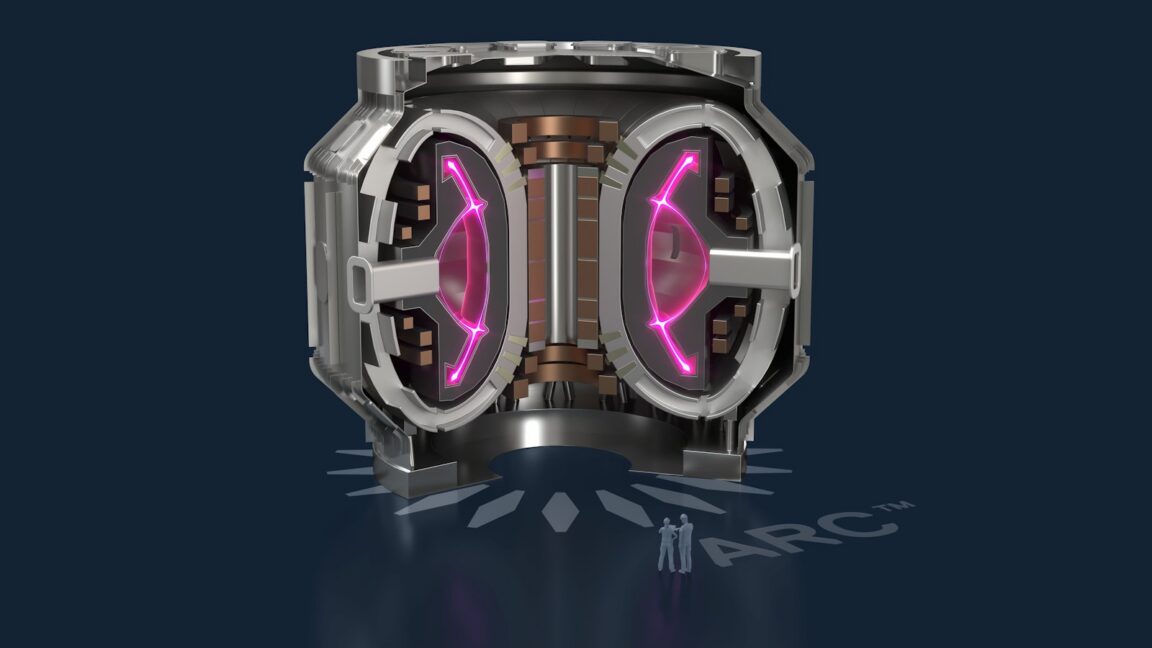
Commonwealth Fusion is a startup that's basically asking "what if we did that, but now?" Its ITER equivalent, a tokamak called SPARC, is over 70 percent complete and is planned to be operating as soon as next year. The company already has a site and customers for the power-generating follow-on, called ARC. Both of those projects are predicated on using high-temperature superconductors to generate an extremely powerful magnetic field that will allow the company to build a smaller reactor, and thus get things done faster.

Years of running plasmas through tokamaks has given us confidence that the basics of these plans are sound. But there are lots of potential devils in the details (otherwise there'd be little need for experimental reactors). So Commonwealth's scientists, in collaboration with the academic community, have recently released five peer-reviewed papers that detail its plans for ARC: what our best models tell us now, and what we'll still need to learn from SPARC to finalize the design of a production fusion plant.

The basics of ARC

The articles are all published in the Journal of Plasma Physics—they're open access, so you can view them yourself, but they are long (roughly 30–40 page PDFs) and highly technical. What follows is an overview of some of what's there and a few things that stood out to me as I went through them.

ARC will be a tokamak that hosts fusion between hydrogen's two heavier isotopes, deuterium and tritium. This reaction results in a helium nucleus and releases a neutron and radiation. The helium transfers heat to the plasma, maintaining the conditions needed for fusion, but it is otherwise a waste product, referred to as "ash" in the fusion context. The neutron and radiation, however, are put to use.

Part of that use is simply imparting energy into a blanket of molten salt that surrounds the fusion chamber. That's energy, in the form of heat, that will be used to drive a turbine that produces the electricity. The molten salt includes lithium ions; when one lithium isotope absorbs a neutron, it decays into more helium, plus a tritium that can be used as fuel for the reactor. There are isotopes present that will also release additional neutrons, allowing this process to generate sufficient fuel.

Overall, the present design of ARC is expected to produce about 1.13 GW of fusion power, with 500 MW of that extracted as electricity. Some of that (100 MW) will be needed to power the plant's operations, leaving 400 MW to be sent to the grid.

The rest of the energy is either kept in the tokamak to maintain the fusion reactions or lost due to inefficiencies in the heat and energy transfer of the system. There's a lot of uncertainty about these numbers; the 1.13 GW is just the center of a range of potential values running from 900 MW to 1.3 GW, so the 400 GW output may need to be adjusted up or down accordingly.

Some of that 400 MW comes during periods where fusion is not occurring. The nuclear reactions will occur within 15-minute-long periods that will be interspersed with one minute resets. The resets are meant to be kept short enough that nothing has much of a chance to cool down before it gets heated up again—thermal inertia will let it continue generating power. That will be one of the key differentiators with SPARC, which doesn't have the heat extraction needed to maintain stable fusion for these long time periods, and so can't maintain the near constant temperatures needed for reliable power generation.

It's inevitable that parts of the device will be exposed to radiation and perhaps fusion plasma. The inner walls of the reactor will be shielded by tungsten, which will limit erosion by the conditions. Meanwhile, the vacuum vessel is designed to be replaced every one to two years. The papers note that this flexibility will allow them to make some design changes even after ARC is built. To enable this, the whole tokamak is meant to split in halves for maintenance.

Instabilities

The two big uncertainties in the operations of ARC are long-standing challenges for fusion: how to handle magnetic instabilities, and how to handle the helium ash and material that escapes the magnetic containment.

Some of the latter will simply be handled by the resets that happen after every 15 minutes of operation, which will clear the reaction chamber and add fresh fuel. But during operations, this will be handled by what's called a divertor, an area where the magnetic field lines are shaped to allow some material out of confinement.

"To maximise ARC’s fusion power output while avoiding excessive erosion of the plasma-facing components, we will need to radiatively dissipate most of the power crossing the last-closed flux surface, injecting radiating impurities such as argon or neon to access divertor detachment," one of the papers says. "Divertor detachment will need to be integrated with a high-performance core plasma, and with efficient impurity pumping to prevent the accumulation of helium ash in the core."

The models they use predict that the system will keep enough pressure at the diverter to spit out enough of the helium ash to keep it from interfering with the fusion reactions. But that prediction will need to be tested empirically.

Magnetic instabilities can lead to a rapid loss of control of the plasma, potentially leading energetic, charged particles to slam into the reactor walls. The tungsten limits the damage and protects the more sensitive hardware, but will be eroded, and the tungsten that is eroded off can stay in the chamber and contaminate further runs of the system.

A lot of work has gone into designing systems that control the magnetic fields containing the plasma, trying to find sensor readings that presage instabilities and choosing adjustments that can suppress them. (This is something that AI-based systems may be useful for.) Commonwealth definitely plans to block as many instabilities as possible. But it's also being realistic and expecting that some will inevitably happen. So, it's planning to simply quench the system with as little damage as possible and restart as quickly as possible in order to not let the heat extraction system cool down significantly. In essence, the idea is to swiftly get the system into the state it's normally in during the minute-long resets that are part of its typical operations.

One of the risks during the instabilities are runaway electrons, which accelerate to relativistic energies and can slam into the walls of the reaction chamber. These may be easy enough to handle with a carefully located wire within the reactor that can convert the electrons to current that can be extracted. But Commonwealth doesn't plan to install one of them until it is clear that this is a significant problem: "SPARC will explore operation... which will provide the data on whether dedicated runaway electron mitigation systems are necessary in ARC."

Far more problematic is the loss of the containment of the heavier particles in the plasma, which are capable of causing more significant erosion. The idea here is to cool the system to lower energies as quickly as possible while keeping the material from running into the wall. So, ARC will contain multiple locations where the controller can inject neon into the reaction chamber in order to handle both issues.

Physics vs. finance

There is obviously a lot more that the Commonwealth team is worried about than what stood out to me. One of the papers had a "non-exhaustive" list of physics issues that SPARC would help them sort out, and it was 18 items long. And, while that will limit the unanswered questions relevant to ARC, the construction of ARC is planned to overlap with the experiments in SPARC, so it's possible there will be some last-minute scrambling needed to adjust ARC's design while it's in progress.

But overall, the peer-reviewed papers make a strong case that, as Commonwealth's chief scientific officer, Brandon Sorbom, put it, "When we build the ARC Fusion Power Plant, it will work." According to our best models, developed using real-world data from multiple tokamaks, ARC should be able to regularly trigger fusion reactions that release more energy than we put into them.

But there's "working" from a physics perspective, and "working" from a market perspective. For this to work as planned, that fusion would have to be sustained for 15-minute periods and suffer very few instabilities over the course of the day to keep everything hot enough to work. And servicing activities like replacing the vacuum container will have to be done quickly enough so that the plant isn't offline for long periods.

Plus there's the financial issues of the large up-front cost for the sophisticated hardware and support infrastructure, as well as the highly technical staff needed to run this sort of facility. One of its major selling points is that it should provide around-the-clock energy without the need for some separate form of storage, but right now, grid operators don't provide much in the way of financial incentives for that sort of reliability. So, Commonwealth will find itself competing with some very cheap forms of generation for parts of the day.

All of which is to say that ARC could work from a physical perspective and still ultimately fail when it starts producing power. Sorbom said the company had run the numbers under a range of assumptions and found that ARC made sense. But the finances are going to be the hardest risk to retire and may require having ARC operate for decades before we have a definitive answer.

Read full article

Comments


Read the whole story
christophersw
3 days ago
reply
Baltimore, MD
Share this story
Delete

How LLMs Work

1 Comment
Comments
Read the whole story
christophersw
6 days ago
reply
This is pretty great.
Baltimore, MD
Share this story
Delete

Trump quietly signs new AI executive order

1 Share

President Trump signed a narrowed executive order on artificial intelligence and cybersecurity Tuesday.

Why it matters: The new order lets the White House kick the can down the road while it considers new rules for cutting-edge AI models and what to do about AI's advanced cybersecurity capabilities.


Driving the news: The surprise move comes more than a week after Trump canceled the release of another version of the order with stricter requirements, saying it could hurt American competitiveness.

What they're saying: "Advanced AI capabilities make our Nation stronger, but also introduce new national security considerations that require coordinated action across executive departments and agencies (agencies), and components," the executive order states.  

  • "As these capabilities evolve, my Administration will continue to work closely with industry to ensure that the best and most secure technology is deployed rapidly to confront any and all threats to our country."

What's inside: Per the executive order, national security agencies will be required to bolster cybersecurity abilities and create a "cybersecurity clearinghouse."

  • Within 60 days, the Treasury Department, the National Security Agency, the Cybersecurity and Infrastructure Security Agency, the National Institute of Standards and Technology and White House officials must "develop and maintain a classified benchmarking process to assess the advanced cyber capabilities of AI models" and decide when a model should be treated as a "covered frontier model."

The intrigue: Former White House AI czar and current adviser David Sacks and National Economic Council deputy director Ryan Baasch pushed for language prohibiting the creation of mandatory government licensing, according to a source familiar.

  • "Nothing in this section shall be construed to authorize the creation of a mandatory governmental licensing, preclearance, or permitting requirement for the development, publication, release, or distribution of new AI models, including frontier models."
  • Sacks has continued to play an influential role from his new perch outside the White House. The abrupt cancellation of the earlier executive order occurred after his involvement, though the president himself was also not keen on it.
  • White House staff, Sacks and Trump discussed the executive order Monday, according to sources familiar. Other tech industry sources had told Axios negotiations were ongoing as of Tuesday morning.

This is breaking news. Check back for updates.


Read the whole story
christophersw
10 days ago
reply
Baltimore, MD
Share this story
Delete

Sonny Rollins, colossus of jazz saxophone, dies aged 95 | Sonny Rollins | The Guardian

1 Comment and 2 Shares

Sonny Rollins, one of the greatest jazz saxophonists of all time, has died aged 95.

His death was announced on his website on Monday, “with deep sorrow and profound love”. His publicist Terri Hinte also confirmed the news.

No cause of death was given but the statement said “the Saxophone Colossus” died at his home in Woodstock, New York, on Monday afternoon. The statement quoted Rollins reflecting on death: “I think when the creative person ends, he continues in the next existence. I’m a person who believes this life isn’t the be-all and end-all of everything. A spiritual person doesn’t feel like that.”

With more than 60 albums released from the late-1940s onwards, including collaborations with Miles Davis, Thelonious Monk, John Coltrane and others, Rollins was one of the last living stars of the bebop generation, who took jazz from a predominantly dance or ballad form into startlingly expressive new territory.

Rollins himself was a genius of melody, whose bright, catchy lines – whether jazz standards or self-penned – would be unpicked, extended and refashioned in improvised and sometimes epic solos. Saxophonist Branford Marsalis has called him “the greatest improviser in the history of jazz” alongside Louis Armstrong; when presenting him with the 2010 National Medal of the Arts in 2011, Barack Obama said Rollins had inspired him to “take risks that I might not otherwise have taken”.

He was born Walter Theodore Rollins in New York City in 1930, and raised in its Harlem district, earning the nickname Sonny from his grandmother. Inspired by a piano-playing sister and violin-playing brother, as well as jazz heroes such as Louis Jordan and Fats Waller, he started learning the saxophone when he was seven. Such was the vibrancy of his area’s jazz scene that one of his first bands, in high school, featured future stars Jackie McLean, Kenny Drew and Art Taylor; just after leaving school he began playing with local talents such as Bud Powell and touring stars such as JJ Johnson, and started composing his own work.

Miles Davis and Sonny Rollins perform together in 1957. Photograph: Bob Parent/Getty Images

Rollins once described himself as “primitive … I’m going with my feelings more than my brain”, and it was this willingness to break with convention and embrace improvisation that helped chart a new course for jazz alongside Davis, Charlie Parker and others in the bebop scene that soon loosened further into hard bop and post-bop. Davis himself wrote about how Rollins quickly became “a legend, almost a god to a lot of the younger musicians … he was an aggressive, innovative player who always had fresh musical ideas”. For his part, Rollins said when reminiscing about his early life: “Jazz is good. It’s not just lecture music, it’s not shake your booty music. It’s everything. It doesn’t make you feel like fighting. It makes you feel that there is a God.”

He was sidetracked by heroin, though, and in 1950 committed an armed robbery to raise funds to feed his habit, later describing himself as “really a despicable character … I alienated everybody except my mother”. He was jailed for 10 months on Rikers Island in New York, but managed to kick his habit with a rehab programme in 1955.

Getting clean helped spur an astonishing burst of creativity: Rollins released his debut album as bandleader in 1953, and recorded 17 more by the end of the decade including landmarks such as Saxophone Colossus (1956), which featured signature tune St Thomas, nodding to calypso and named after his mother’s Caribbean place of birth; the piano-free “strolling” style explored on Way Out West (1957); and Freedom Suite (1958), where his emancipated composition on the 20-minute title track became an elegant argument for freedom in the midst of the growing civil rights movement. Collaborators in this period included Dizzy Gillespie, Max Roach, Art Blakey and others.

In 1959, Rollins took a three-year break from recording and on-stage performance, honing his craft by practising for up to 15 hours a day on the pedestrian walkway of the Williamsburg Bridge, partly so as not to disturb his neighbours – it inspired his 1962 comeback album The Bridge. Outside of another sabbatical between 1969 and 1971, when he travelled to an Indian ashram to study yoga, philosophy and meditation, these two decades saw him join the avant-garde and fusion directions in the jazz scene, playing Latin American music on What’s New (1962); freer (but still highly melodic) improvisations on Sonny Meets Hawk! (1963) and East Broadway Run Down (1966); and, in the 1970s, R&B-inflected takes on material by Stevie Wonder, Patrice Rushen and others. He also composed and performed the soundtrack to the 1966 Michael Caine film Alfie (minus the Cilla Black theme song).

In the 1980s, he continued to fuse his playing with funk and calypso, and added uncredited soloing to the Rolling Stones’ 1981 album Tattoo You. He focused his live performances away from “smoke-filled, cash-register-banging night clubs” and on to larger stages, and campaigned around the growing climate crisis with benefit concerts and his 1998 album Global Warming. “Right now, it’s like we’re on the Titanic, but everybody’s just watching Titanic,” he later said.

Sonny Rollins performing in 2012. Photograph: Jack Vartoogian/Getty Images

Rollins married twice, first (and briefly) to Dawn Finney in 1957. He met his next wife, Lucille Pearson, that year, and they married in 1965, remaining together until her death in 2004. The couple were at home just six blocks from the World Trade Center on September 11 – they evacuated to upstate New York with Rollins carrying only his saxophone. Three days later, he drove to Boston for an acclaimed live set that would be released as Without a Song: The 9/11 Concert, which won him a Grammy for best jazz instrumental solo. Rollins later told the Guardian: “I lost many prized possessions in 9/11 and learned a lesson – possessions are not where it’s at.”

He earned a lifetime achievement Grammy award in 2004, and after touring and performing throughout his life, retired in 2014 after being diagnosed with the lung disease pulmonary fibrosis. “I went through a period of depression; I was really low,” he said in 2017. “I’d been on this life quest to try and fulfil my potential with music, and not being able to play any more meant I wasn’t going to get a chance to do that. But I eventually came out of my depression when I realised that rather than being depressed I should be grateful. I had an opportunity to live a life as a musician, which I always wanted to do.”

He once said that his aim was “to reach a level where I will never cease to make progress” and even in 2013, just before his retirement, he was arguing he still had much to do: “People say, ‘Sonny, take it easy, lean back. Your place is secure. You’re the great Sonny Rollins; you’ve got it made.’ I hear that and I think, ‘Well, screw Sonny Rollins. Where I want to go is beyond Sonny Rollins. Way beyond.’”

Read the whole story
acdha
17 days ago
reply
🎷
Washington, DC
christophersw
17 days ago
reply
Baltimore, MD
Share this story
Delete

FBI agent explains how easy it is to ID people posting AI porn without consent

1 Share

The earliest arrests under the Take It Down Act (TIDA) suggest that cops don't have to work too hard to identify people illegally posting and selling nonconsensual sexualized deepfakes of women online.

Last week, the FBI arrested two men after visiting porn websites and clicking on hashtags like #AI #Deepfakes or video titles like "AI_tits" or "Ass_AI."

One suspect accused of violating TIDA was 20-year-old Arturo Hernandez. He allegedly posted 113 albums viewed nearly a million times featuring AI-generated sexualized images and videos of approximately 50 women. Victims included political figures, actresses, and musicians, as well as women who are not public figures, such as female individuals who attended his Texas high school and an Instagram friend.

Geo-location data helped cops identify Hernandez as a suspect. In his affidavit, an FBI special agent, Christopher Powell, explained that cops investigating the porn site found a second account re-posting all the content that Hernandez allegedly uploaded. That second account was linked to Hernandez's PayPal account, the complaint said, and an IP address often used to log in to it was the same IP that Hernandez's Apple records showed he'd used to log in to his iCloud.

While sexualized deepfakes of celebrities and politicians may be easiest to spot in the wild, cops also sought evidence tying Hernandez to AI content depicting people he knew. It likely simplified their search to find that not only did Hernandez follow the Instagram account of one victim, but cops discovered that Hernandez had also saved in a folder on his own Instagram account the specific image used to create AI porn content viewed more than 36,000 times.

Hernandez seemingly tried to distance himself from some of the activity, for example, by registering his Gmail account with the nickname "Ryan" instead of his actual first name. However, cops noted that Hernandez used the "Ryan" nickname elsewhere online, including on his Snapchat account.

However, the other man arrested, 51-year-old Cornelius "Neil" Shannon, was allegedly less careful, Powell's affidavit for that arrest showed.

Shannon is accused of publishing approximately 360 AI-generated albums that have been viewed more than 2 million times, featuring approximately 90 women, primarily political figures, actresses, and musicians.

Powell's affidavit suggested it was trivially easy to link Shannon to the porn site account because Shannon apparently used his own photo as the profile pic. Cross-referencing Department of Motor Vehicle records and surveillance photos, cops alleged that a man seen posing in a Mets baseball shirt on the account's profile appeared to be Shannon.

Both Hernandez and Shannon risk up to two years in prison if cops can prove they violated TIDA.

FTC warns 12 nudify toolmakers

Officials appear motivated to track images posted online and enforce the law.

In a press release announcing the recent arrests, Joseph Nocella, Jr., United States Attorney for the Eastern District of New York, accused the suspects of using "cutting-edge digital technology to create images that degraded and violated victims across the United States." And James C. Barnacle, Jr., assistant director in charge of the New York FBI field office, confirmed that his agents would continue investigating similar cases.

"This predatory conduct represents a disturbing abuse of technology that inflicts emotional harm on victims, violating their privacy, dignity, and security," Barnacle said. "The use of this emerging technology to victimize individuals is not innovative—it is criminal and will be pursued with the full force of the law."

However, some people charged with TIDA violations may continue using the technology to harm victims, as it remains readily available and relatively cheap to make realistic-looking content sexualizing real people. An Ohio man who was hailed by the US Justice Department as the first arrest under TIDA notably continued making sexualized deepfakes while on pre-trial release, apparently undeterred by even the threat of imminent consequences.

To block people from using AI services to "undress" people and share harmful images online, the Federal Trade Commission announced last week that it sent warning letters to 12 companies offering so-called "nudify" tools.

Those companies appear to be violating TIDA, the FTC warned, and need to implement "a process through which victims can request the removal of nonconsensual intimate images appearing on their platforms" within 48 hours or risk "civil penalties of up to $53,088 per violation."

It's unclear if the social media platform X—which has been sued by three girls who claimed its chatbot Grok turned their real photos into AI child sexual abuse materials—received a warning. But X's Safety account posted last week, notifying users that TIDA victims can report harmful content through the Help Center. They can also report any post by "tapping the three-dot menu (⋯), selecting 'Private or Non-Consensual Content' > 'Report content under the US Take It Down Act' and then completing the form."

"Our team reviews these reports as fast as possible and well within the Act’s 48-hour timeline," the X Safety account said.

More broadly, the FTC is seemingly stepping up enforcement after a deadline passed this month when all online platforms were required to have such a process in place. A week before the warning letters went out to nudify services, the FTC sent additional letters to operators of major platforms, including Amazon, Alphabet, Apple, Automattic, Bumble, Discord, Match Group, Meta, Microsoft, Pinterest, Reddit, SmugMug, Snapchat, TikTok, and X. Those letters told platforms to be prepared to face penalties for any non-compliance.

Even if such a process were in place on every online platform, however, TIDA seems imperfect, since it doesn’t stop the initial sharing and still puts the burden on the victim to monitor and flag harmful images across the Internet. Critics have warned that the process could also be abused by people, including possibly Donald Trump, who hope platforms will automatically remove any reported content they don't like.

Read full article

Comments


Read the whole story
christophersw
17 days ago
reply
Baltimore, MD
Share this story
Delete
Next Page of Stories