Entrepreneur, Law & Policy Analyst helping clients w/ strategic planning, communications interoperability, Software Developer, Scotch Enthusiast.
3806 stories
·
18 followers

Victory! 702 has Expired!

1 Share

Section 702 of the Foreign Intelligence Surveillance Act lets US intelligence agencies collect communications from foreigners abroad without a warrant, and routinely sweeps in Americans’ emails, messages, and calls in the process.

The authority for this program is set to expire Friday, June 12th, 2026, at midnight. As we wrote earlier this week, Congress has been kicking the ball down the road for months now—temporarily postponing the expiration of the mass surveillance authority Section 702 of FISA in hopes that some consensus on a longer reauthorization could be reached. 

EFF has said for decades, every time this program is up for renewal: Section 702 should require a warrant before the Federal Bureau of Investigation can look at digital communications collected from Americans. If not, we should let the whole thing expire. And this time, it has, at least for a little while. 

Ironically, we have Bill Pulte to thank for this (probably temporary) reprieve. Earlier this month, Trump on Tuesday named Pulte – currently director of the Federal Housing Finance Agency (FHFA) and chairman of Fannie Mae and Freddie Mac – to replace current DNI Tulsi Gabbard, who announced her resignation last month. As has been widely reported, Pulte lacks any intelligence, military, or congressional experience. Senate Democrats responded by refusing to move forward with their version of a bill to reauthorize Section 702. Similarly, the House refused to approve even a short-term renewal of the program. 

However, the potential for abuse of this program is not limited to one individual or one administration. And if Congress is this concerned about one particular individual having access to Americans’ most sensitive information, the responsible thing to do is to put more transparency, accountability, and oversight into the structure of this program. 

Members on both sides of the aisle understand this. As we have seen several times this year already, the appetite for reform is stronger than ever. We hope to continue to see strong bipartisan opposition in Congress to renewing Section 702 without a warrant requirement for backdoor searches. Until then, the authority for this program should remain expired. 


Read the whole story
christophersw
1 day ago
reply
Baltimore, MD
Share this story
Delete

We Are Crowdsourcing the Panopticon

2 Shares


A man raises his phone as police move into a crowd. The video is shaky, loud, immediate. Within minutes, it is online. Within hours, it is everywhere. This is how accountability works now. Something happens, someone records it, and that footage can show what really happened, sometimes contradicting official accounts. It can empower citizens and create consequences for officials.

But the footage’s life cycle does not end there.

In recent months, civil liberties groups have warned that adding facial recognition to consumer smart glasses could turn everyday recording into something more troubling: real-time facial identification. It reflects a broader shift already underway, where images and videos captured for one purpose can later be searched, matched, and used for another.

An ouroboros is an ancient Egyptian symbol, a snake or dragon eating its own tail. As I began to see patterns in my broader research on surveillance corporatism and governance lag, I began using the term “surveillance ouroboros” to describe this recursive pattern of observations intended to hold power accountable becoming new input for the same surveillance infrastructure.

Facial recognition changes accountability

During the George Floyd protests in 2020, people filmed police in real time. Phones were pointed at officers, not at each other. The goal was simple: to show what the state was doing. That footage spread quickly and became part of a much larger pool of public data.

At the same time, reporting from outlets including The New York Times and BuzzFeed News showed that law enforcement agencies were using facial-recognition tools, including systems built by Clearview AI. Those systems were built from billions of images scraped from across the internet, including publicly available photos and videos.

The basic approach is now routine: People record the state, or anything else (as in the January 6 attack on the U.S. Capitol), and the state compiles that footage and data into a searchable environment, which may later be used to identify some of the same people who made the footage.

Facial-recognition systems used by law enforcement are increasingly outpacing the legal safeguards.

A 2023 Government Accountability Office review found that federal law enforcement agencies continued to expand their use of facial-recognition systems for criminal investigations despite ongoing concerns around training, privacy protections, civil-liberties safeguards, and oversight. Earlier GAO findings showed that agencies had conducted roughly 60,000 facial-recognition searches before formal training requirements were put in place for personnel using the systems.

The American Civil Liberties Union and other groups have warned that these tools could be used to identify people from images shared online, including protest-related footage. Concerns about facial recognition led some U.S. states and cities, including San Francisco and Boston, to restrict or ban government use of the technology, while federal agencies have continued to face scrutiny over how such systems are tested, deployed, and audited. A 2024 analysis published in Internet Policy Review warned that facial-recognition systems used by law enforcement are increasingly outpacing the legal safeguards meant to govern them, creating growing tensions around data protection, oversight, and proportional use.

The spy network that built itself

Surveillance used to require infrastructure. Cameras had to be installed, and data had to be collected deliberately. That is no longer the case. People carry cameras everywhere. They record constantly and upload in real time. Events are documented from multiple angles without planning or coordination. The cumulative result is a continuous stream of usable data: faces, locations, timestamps, and interactions. The Internet of Things (IoT) also waits all around us, gathering information and releasing it when people least expect it, as Andrew Guthrie Ferguson describes in a recent excerpt of his book Your Data Will Be Used Against You.

Similar dynamics are emerging globally. A recent analysis in the International Journal of Law and Information Technology examined how facial-recognition systems in China and Japan are expanding faster than the legal frameworks governing them. Reporting by The Guardian described the limited legal protections around the rapid deployment of AI-assisted surveillance infrastructure across parts of Africa.

There used to be a clear distinction between surveillance and accountability. Surveillance meant the powerful watching the people; authorities tended not to share their imagery except under duress or a court order and usually after a long delay. Accountability meant the people watching the powerful and often publishing imagery immediately to head off or counteract official mischief. That distinction no longer holds. The same footage can serve both roles. A recording meant to expose misconduct can later be used to identify someone else entirely.

Surveillance ouroboros is not a future risk. It is already here.

This dynamic persists because people still need to record. In many places, it is one of the only tools available when formal accountability breaks down. When oversight institutions weaken or fail, public documentation becomes a substitute. In that environment, people turn to visibility. But that visibility comes with a cost. The more people that document, the more data that exists. The more data that exists, the easier it is to search, match, and store. Every video feeds the ouroboros. People are not feeding the system because they trust it. They are feeding it because the alternative is silence.

Most of the people in these videos are not the focus. They are in the background, passing by or standing nearby. But that distinction does not matter once the footage enters a system. Today’s facial recognition can identify even a face that passed through the corner of a frame. Someone who did nothing can still become part of a dataset without ever knowing it. As recognition systems improve, older footage becomes more useful—and invasive.

No single decision created this outcome. It emerged gradually through more cameras, better recognition, larger datasets, and easier integration. Each step made sense on its own. Together, they changed what recording means.

Public recording is still necessary. Without it, many forms of abuse would remain hidden. But recording is no longer just exposure. It is also contribution. If you published imagery or video last year, you may already have contributed to a system you have never seen but the ouroboros has.

Surveillance ouroboros is not a future risk. It is already here. Every time someone presses publish, they are doing two things at once. They are exposing power, and they are helping build the system that the powerful will later use to track the less powerful.

Read the whole story
christophersw
2 days ago
reply
Baltimore, MD
satadru
3 days ago
reply
New York, NY
Share this story
Delete

US bans differential privacy in Census data

1 Share
Comments
Read the whole story
christophersw
2 days ago
reply
Baltimore, MD
Share this story
Delete

Anthropic shuts down Fable, Mythos models following Trump admin directive

1 Share

Anthropic completely shut off access to its Mythos 5 and Fable 5 models Friday night, just days after they were launched.

The move comes after Anthropic's receipt of a US Commerce Department directive Friday evening, subjecting the new models to export controls restricting their use anywhere outside the United States. In a message posted Friday night, Anthropic said the only way for it to ensure compliance with that government order in the immediate term "is that we must abruptly disable Fable 5 and Mythos 5 for all our customers." Access to other Anthropic models is not affected.

An Axios report cited an administration official saying that the administration is concerned by reports of a jailbreak that reportedly gets around broad classifier-based safeguards meant to block Fable 5 prompts regarding cybersecurity, chemistry, and biology. The administration reportedly requested a pause in the release of these models to gain time for the "national security apparatus" to be "hardened" against this kind of threat. That hardening could be complete "in the next few weeks," Axios' source suggested.

In its Friday night announcement post, Anthropic said the government has only provided it with "verbal evidence of a potential narrow, non-universal jailbreak" that involves getting Fable 5 to review a specific codebase for software flaws. The company says it has only seen evidence of this kind of jailbreak being used to find "minor" and "relatively simple" software vulnerabilities, and that other publicly available models like GPT-5.5 has similar capabilities on this score.

"We are complying with the government’s legal directive and are removing access to Fable 5 and Mythos 5 for all users," Anthropic writes. "However, we disagree that the finding of a narrow potential jailbreak should be cause for recalling a commercial model deployed to hundreds of millions of people. If this standard was applied across the industry, we believe it would essentially halt all new model deployments for all frontier model providers."

Earlier this month, President Trump signed an executive order urging AI model makers to submit to voluntary government security testing. That order came after an initial signing ceremony planned for last month was abruptly postponed amid reported concerns of disagreements about it within the administration.

Anthropic apologized to customers for a "disruption" that it said is the result of a "misunderstanding," and said it will release more details about the situation in the next 24 hours.

Read full article

Comments


Read the whole story
christophersw
2 days ago
reply
Baltimore, MD
Share this story
Delete

When it comes to total water use, AI data centers are a drop in the bucket

1 Comment

If you hang out in any even vaguely AI-skeptical parts of the Internet, you've probably stumbled on plenty of memes and posts premised on data centers' insatiable thirst for water to power evaporative cooling. But a new report from Amazon highlights just how little water all these AI data centers are using in aggregate, on a relative basis, even as individual data centers can strain local water supplies.

In a Thursday blog post, Amazon claims its data centers withdrew "about 2.5 billion gallons" globally in 2025. That number sounds incredibly large at first glance, but it looks downright puny compared to the 117 trillion gallons of water withdrawn in the US alone in 2015. It's also useful to compare Amazon's number to stats from more water-intensive areas, from the 3.3 trillion gallons used annually on US lawns and landscaping to the 1.3 trillion gallons a year used in California almond orchards to the 531 billion gallons a year used just for US golf courses.

Amazon is just one company, of course, and a relative latecomer to reporting its data center water usage numbers. Google data centers withdrew about more than 6.1 billion gallons of water in 2024, on top of about 2.75 billion gallons from Microsoft and about 1.4 billion gallons from Meta in the same year.

All told, a 2021 Nature study estimates that all US data centers combined consumed about 163 billion gallons of water that year, a number that includes "indirect" consumption from non-renewable power sources. That number has doubtlessly increased in the AI-driven years since that study was published—one analysis estimates that Texas data centers alone used 25 to 49 billion gallons in 2024, and could grow to withdraw 399 billion gallons in 2030. But even annual data center water usage measured in the trillions would represent a figurative (and kind of literal) drop in the bucket compared to national and worldwide water usage statistics.

Think globally, worry locally

While there's no risk of big tech companies literally draining the oceans to power the data centers behind their LLMs, even moderately sized data centers can have an outsized effect on nearby water resources. A single Meta data center in Newton County, Georgia, for instance, now uses about 10 percent of the entire county's water supply, according to a New York Times report from last year. And the Interstate Commission on the Potomac River Basin recently estimated that data centers account for 8 percent of total water consumption in the region, a rate that could climb to 29 percent by 2050 if the large concentration of data centers in northern Virginia continues apace.

That kind of concentrated water use can put severe strain on local infrastructure and water supplies, and has led to at least one situation where a data center siphoned millions of gallons from local sources without initially paying. The local impacts can be especially severe in areas that are already water-stressed; a 2025 Business Insider report found that 40 percent of planned and existing data centers in the US are in areas with "high" or "extremely high" water scarcity, as measured by the World Resources Institute.

In light of these concerns, the biggest tech companies are eager to project an image of efficiency and responsible stewardship regarding water supplies. Amazon says it has been letting data centers run hotter to use less water for cooling, helping it to use less water per kilowatt-hour than other major data center providers. Amazon also says it's funding "50 water projects expected to return more than 5.8 billion gallons of water annually for use by local communities," and Google has laid out 165 water stewardship projects that it says "are expected to replenish more than 19 billion gallons of water annually by 2030."

If all the memes and worries about data center water consumption are helping to drive this kind of environmental responsibility among PR-focused big tech companies, that's all for the better. But if your concerned friend starts worrying about AI data centers literally causing a worldwide water catastrophe, the actual numbers involved should hopefully put those worries to rest.

Read full article

Comments


Read the whole story
christophersw
3 days ago
reply
Almonds and golf… oof
Baltimore, MD
Share this story
Delete

Commonwealth Fusion makes the physics case for its 400 MW reactor

1 Share

The scientific community has a plan for achieving fusion power. It involves getting a better understanding of how to control fusion in a tokamak-style reactor using the currently under construction ITER reactor, and then using that knowledge to build DEMO-style plants. But ITER isn't even expected to see hot plasmas until the middle of the 2030s, by which point solar panels will be so cheap that we'll probably all be getting them free in our cereal boxes.

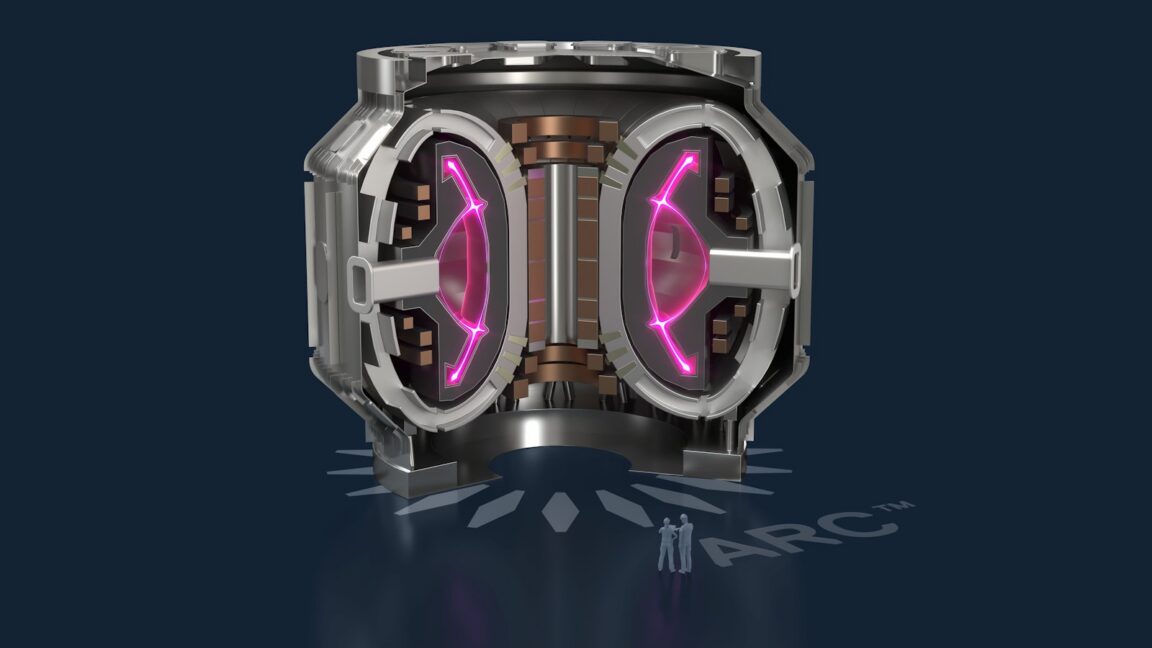
Commonwealth Fusion is a startup that's basically asking "what if we did that, but now?" Its ITER equivalent, a tokamak called SPARC, is over 70 percent complete and is planned to be operating as soon as next year. The company already has a site and customers for the power-generating follow-on, called ARC. Both of those projects are predicated on using high-temperature superconductors to generate an extremely powerful magnetic field that will allow the company to build a smaller reactor, and thus get things done faster.

Years of running plasmas through tokamaks has given us confidence that the basics of these plans are sound. But there are lots of potential devils in the details (otherwise there'd be little need for experimental reactors). So Commonwealth's scientists, in collaboration with the academic community, have recently released five peer-reviewed papers that detail its plans for ARC: what our best models tell us now, and what we'll still need to learn from SPARC to finalize the design of a production fusion plant.

The basics of ARC

The articles are all published in the Journal of Plasma Physics—they're open access, so you can view them yourself, but they are long (roughly 30–40 page PDFs) and highly technical. What follows is an overview of some of what's there and a few things that stood out to me as I went through them.

ARC will be a tokamak that hosts fusion between hydrogen's two heavier isotopes, deuterium and tritium. This reaction results in a helium nucleus and releases a neutron and radiation. The helium transfers heat to the plasma, maintaining the conditions needed for fusion, but it is otherwise a waste product, referred to as "ash" in the fusion context. The neutron and radiation, however, are put to use.

Part of that use is simply imparting energy into a blanket of molten salt that surrounds the fusion chamber. That's energy, in the form of heat, that will be used to drive a turbine that produces the electricity. The molten salt includes lithium ions; when one lithium isotope absorbs a neutron, it decays into more helium, plus a tritium that can be used as fuel for the reactor. There are isotopes present that will also release additional neutrons, allowing this process to generate sufficient fuel.

Overall, the present design of ARC is expected to produce about 1.13 GW of fusion power, with 500 MW of that extracted as electricity. Some of that (100 MW) will be needed to power the plant's operations, leaving 400 MW to be sent to the grid.

The rest of the energy is either kept in the tokamak to maintain the fusion reactions or lost due to inefficiencies in the heat and energy transfer of the system. There's a lot of uncertainty about these numbers; the 1.13 GW is just the center of a range of potential values running from 900 MW to 1.3 GW, so the 400 GW output may need to be adjusted up or down accordingly.

Some of that 400 MW comes during periods where fusion is not occurring. The nuclear reactions will occur within 15-minute-long periods that will be interspersed with one minute resets. The resets are meant to be kept short enough that nothing has much of a chance to cool down before it gets heated up again—thermal inertia will let it continue generating power. That will be one of the key differentiators with SPARC, which doesn't have the heat extraction needed to maintain stable fusion for these long time periods, and so can't maintain the near constant temperatures needed for reliable power generation.

It's inevitable that parts of the device will be exposed to radiation and perhaps fusion plasma. The inner walls of the reactor will be shielded by tungsten, which will limit erosion by the conditions. Meanwhile, the vacuum vessel is designed to be replaced every one to two years. The papers note that this flexibility will allow them to make some design changes even after ARC is built. To enable this, the whole tokamak is meant to split in halves for maintenance.

Instabilities

The two big uncertainties in the operations of ARC are long-standing challenges for fusion: how to handle magnetic instabilities, and how to handle the helium ash and material that escapes the magnetic containment.

Some of the latter will simply be handled by the resets that happen after every 15 minutes of operation, which will clear the reaction chamber and add fresh fuel. But during operations, this will be handled by what's called a divertor, an area where the magnetic field lines are shaped to allow some material out of confinement.

"To maximise ARC’s fusion power output while avoiding excessive erosion of the plasma-facing components, we will need to radiatively dissipate most of the power crossing the last-closed flux surface, injecting radiating impurities such as argon or neon to access divertor detachment," one of the papers says. "Divertor detachment will need to be integrated with a high-performance core plasma, and with efficient impurity pumping to prevent the accumulation of helium ash in the core."

The models they use predict that the system will keep enough pressure at the diverter to spit out enough of the helium ash to keep it from interfering with the fusion reactions. But that prediction will need to be tested empirically.

Magnetic instabilities can lead to a rapid loss of control of the plasma, potentially leading energetic, charged particles to slam into the reactor walls. The tungsten limits the damage and protects the more sensitive hardware, but will be eroded, and the tungsten that is eroded off can stay in the chamber and contaminate further runs of the system.

A lot of work has gone into designing systems that control the magnetic fields containing the plasma, trying to find sensor readings that presage instabilities and choosing adjustments that can suppress them. (This is something that AI-based systems may be useful for.) Commonwealth definitely plans to block as many instabilities as possible. But it's also being realistic and expecting that some will inevitably happen. So, it's planning to simply quench the system with as little damage as possible and restart as quickly as possible in order to not let the heat extraction system cool down significantly. In essence, the idea is to swiftly get the system into the state it's normally in during the minute-long resets that are part of its typical operations.

One of the risks during the instabilities are runaway electrons, which accelerate to relativistic energies and can slam into the walls of the reaction chamber. These may be easy enough to handle with a carefully located wire within the reactor that can convert the electrons to current that can be extracted. But Commonwealth doesn't plan to install one of them until it is clear that this is a significant problem: "SPARC will explore operation... which will provide the data on whether dedicated runaway electron mitigation systems are necessary in ARC."

Far more problematic is the loss of the containment of the heavier particles in the plasma, which are capable of causing more significant erosion. The idea here is to cool the system to lower energies as quickly as possible while keeping the material from running into the wall. So, ARC will contain multiple locations where the controller can inject neon into the reaction chamber in order to handle both issues.

Physics vs. finance

There is obviously a lot more that the Commonwealth team is worried about than what stood out to me. One of the papers had a "non-exhaustive" list of physics issues that SPARC would help them sort out, and it was 18 items long. And, while that will limit the unanswered questions relevant to ARC, the construction of ARC is planned to overlap with the experiments in SPARC, so it's possible there will be some last-minute scrambling needed to adjust ARC's design while it's in progress.

But overall, the peer-reviewed papers make a strong case that, as Commonwealth's chief scientific officer, Brandon Sorbom, put it, "When we build the ARC Fusion Power Plant, it will work." According to our best models, developed using real-world data from multiple tokamaks, ARC should be able to regularly trigger fusion reactions that release more energy than we put into them.

But there's "working" from a physics perspective, and "working" from a market perspective. For this to work as planned, that fusion would have to be sustained for 15-minute periods and suffer very few instabilities over the course of the day to keep everything hot enough to work. And servicing activities like replacing the vacuum container will have to be done quickly enough so that the plant isn't offline for long periods.

Plus there's the financial issues of the large up-front cost for the sophisticated hardware and support infrastructure, as well as the highly technical staff needed to run this sort of facility. One of its major selling points is that it should provide around-the-clock energy without the need for some separate form of storage, but right now, grid operators don't provide much in the way of financial incentives for that sort of reliability. So, Commonwealth will find itself competing with some very cheap forms of generation for parts of the day.

All of which is to say that ARC could work from a physical perspective and still ultimately fail when it starts producing power. Sorbom said the company had run the numbers under a range of assumptions and found that ARC made sense. But the finances are going to be the hardest risk to retire and may require having ARC operate for decades before we have a definitive answer.

Read full article

Comments


Read the whole story
christophersw
6 days ago
reply
Baltimore, MD
Share this story
Delete
Next Page of Stories